From Shakes to Shelter: Your Guide to Cedar Roof Installation

Why Cedar Roofing Installation in First Addition, OR Is Worth Understanding
Cedar roofing installation in First Addition or offers natural beauty, durability, and energy efficiency, making it a timeless choice for Pacific Northwest homes. If you’re considering a cedar roof, here’s what the installation process involves:
Quick Overview of Cedar Roof Installation:
- Tear off the old roof and inspect/repair the deck
- Install underlayment and flashing for moisture protection
- Lay a double-layer starter course with proper overhang
- Install main courses with correct exposure, spacing, and staggered joints
- Finish with ridge caps for a weathertight seal
- Maintain proper ventilation to prevent moisture buildup and extend lifespan
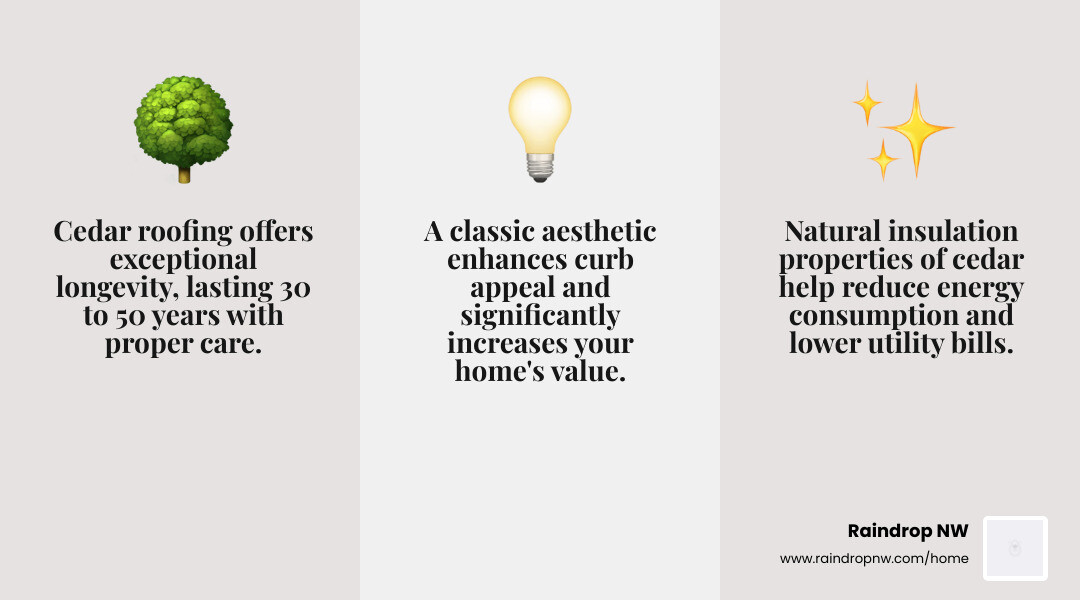
Cedar shingles and shakes have protected homes for centuries, offering a rustic elegance that complements First Addition’s neighborhood character. A properly installed and maintained cedar roof can last 30 to 50 years, making it a smart investment for homeowners who value quality and authenticity.
For reliable cedar roofing services, explore our roof types and products, or if you’re ready to move forward, get a professional new replacement roof.
I’m Torrey Yungeberg, owner of Raindrop Roofing NW. I built this business on a foundation of getting every detail right. Through countless cedar roofing installation in First Addition or projects, I’ve seen how proper technique and quality materials make all the difference in protecting what matters most to families.
Pre-Installation Essentials: Planning Your Cedar Roof
Planning your cedar roofing installation in First Addition or is the first step. Understanding the materials and preparation will help you make choices that define your home’s character for decades.
First, let’s clarify the difference between cedar shingles and shakes.
| Feature | Cedar Shingles | Cedar Shakes |
|---|---|---|
| Appearance | Smoother, more uniform, neat | Rustic, textured, rougher, thicker butt |
| Manufacturing | Machine-cut, sawn on both faces | Hand-split or Tapersawn (split face, sawn back) |
| Thickness | Thinner, typically 7/16-inch butt | Thicker, 5/8 to 3/4-inch butt (or more) |
| Installation | Three-ply application, laid tighter | Two-ply application with felt interlay, wider gaps |
Both are typically crafted from Western Red Cedar, known for its warm tones and moisture resistance, or Alaskan Yellow Cedar, which is denser and weathers beautifully. Look for Certi-label products from the Cedar Shake & Shingle Bureau to ensure you’re getting high-quality materials that meet strict standards.
Cedar also offers excellent energy efficiency due to its natural insulating properties, helping to lower utility bills. As a sustainable and biodegradable material, it’s an environmentally friendly choice.
Ready to explore your options? Check out our roof types and products page to see what might work best for your home.
Essential Tools and Materials
A successful cedar roofing installation in First Addition or requires the right tools and materials. Key materials include:
- Certi-label cedar shingles or shakes (order 10% extra for waste)
- Quality underlayment (like #30 roofing felt or a self-adhering membrane)
- Drip edge and metal flashing
- Stainless steel or hot-dipped galvanized nails to prevent corrosion in Oregon’s damp climate
Essential tools include a roofing hammer, utility knife, chalk line, tape measure, and a pry bar for tear-off. Safety equipment is non-negotiable: always use gloves, safety glasses, a hard hat, and proper fall protection.
For more details on what’s involved in professional installation, visit our roof types and products page.
Understanding Cedar Grades and Types
The grade and type of cedar you choose will affect your roof’s appearance and longevity.
- Premium Grade (Grade 1) is the top tier, offering 100% clear heartwood for maximum stability and resistance to warping.
- Number 1 Grade is also excellent quality, balancing performance and value.
Tapersawn shakes are sawn on both sides for a uniform but robust look. Handsplit shakes are split by hand, creating a more rustic, textured appearance. Shakes are generally thicker than shingles, which improves durability and insulation.
Cedar’s natural resistance to decay comes from oils within the wood that repel moisture and insects. Over time, cedar goes through a beautiful weathering process, turning to a distinguished silver-gray patina.
Why Choose Cedar for Your Oregon Home?
In neighborhoods like First Addition, cedar is a popular choice for several reasons:
- Natural Beauty: Cedar’s warm tones and organic texture complement any architectural style, weathering to a timeless silver-gray.
- Longevity: A properly installed cedar roof lasts 30 to 50 years, significantly longer than standard asphalt.
- Resistance: Its natural oils resist moisture and insects, making it ideal for Oregon’s climate.
- Performance: Cedar provides natural insulation, regulating home temperatures and withstanding wind and impact.
- Home Value: A cedar roof is a key selling point that can significantly boost your home’s value.
At Raindrop NW, we’ve seen how the right roofing choice transforms homes. For more information about how we approach residential projects with care and expertise, visit our residential roofing page.
The Step-by-Step Process for Cedar Roofing Installation in First Addition, OR
A cedar roofing installation in First Addition or is a rewarding process when done correctly. Here are the crucial steps to ensure a beautiful, long-lasting roof.
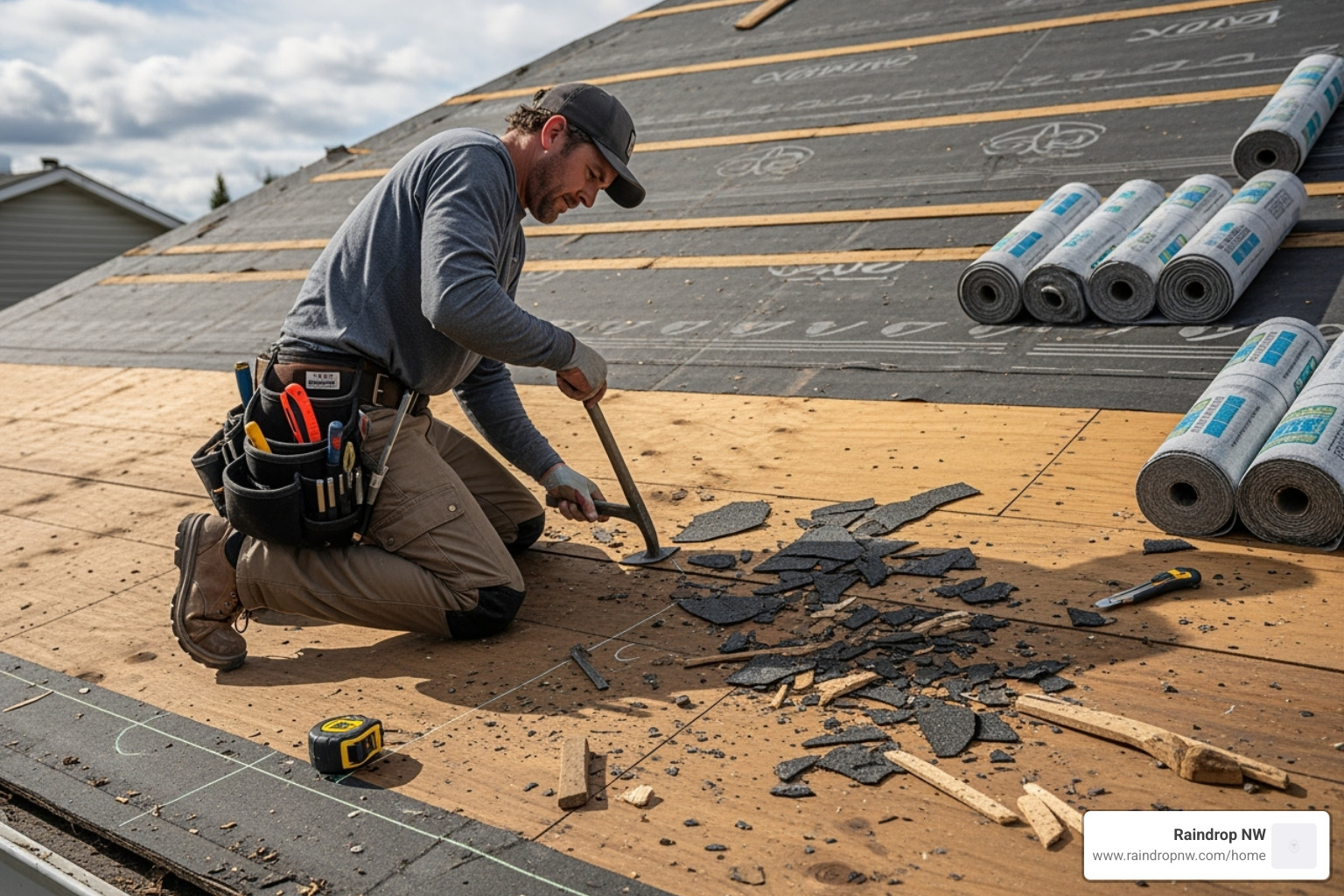
Safety is our top priority. Our crew uses proper safety gear and fall protection on every job. We also ensure all work complies with local First Addition building codes and manufacturer guidelines.
Step 1: Tearing Off the Old Roof and Preparing the Deck
The first step is removing the old roofing material to create a clean foundation for the new cedar. We remove all old materials and thoroughly inspect the roof sheathing for damage, rot, or weak spots. Any compromised sheathing is replaced. A solid, clean, and dry deck is essential for the longevity of your new cedar roof.
If you’re dealing with extensive damage, our team specializes in roof repairs and maintenance and can ensure everything is perfectly prepared.
Step 2: Installing Underlayment and Flashing
Next, we install the underlayment and flashing, which act as a critical moisture barrier. We roll out roofing felt or synthetic underlayment over the entire deck, overlapping each row to prevent water intrusion. For extra protection in vulnerable areas like eaves and valleys, we use a self-adhering ice and water shield.
We install a drip edge along the eaves to direct water into the gutters. Then, we carefully install metal flashing around all penetrations like chimneys, skylights, and vents. Properly installed flashing is vital for preventing leaks and is a key part of a durable roofing system.
For more on how we ensure your roof is watertight, take a look at our services for waterproof deck surfaces.
Step 3: Laying the Starter Course for your cedar roofing installation in First Addition, OR
The starter course is one of the most important rows, setting the foundation for the entire roof. We approach this step with precision for every cedar roofing installation in First Addition or. We install a double layer of shingles at the roof’s bottom edge, with a 1 to 1.5-inch overhang. This creates a drip edge that directs water into the gutters, protects the roof’s edge, and provides a solid base for the subsequent courses.
Step 4: Installing the Main Courses of Shingles
With the starter course laid, we install the main courses of shingles, where consistency is key.
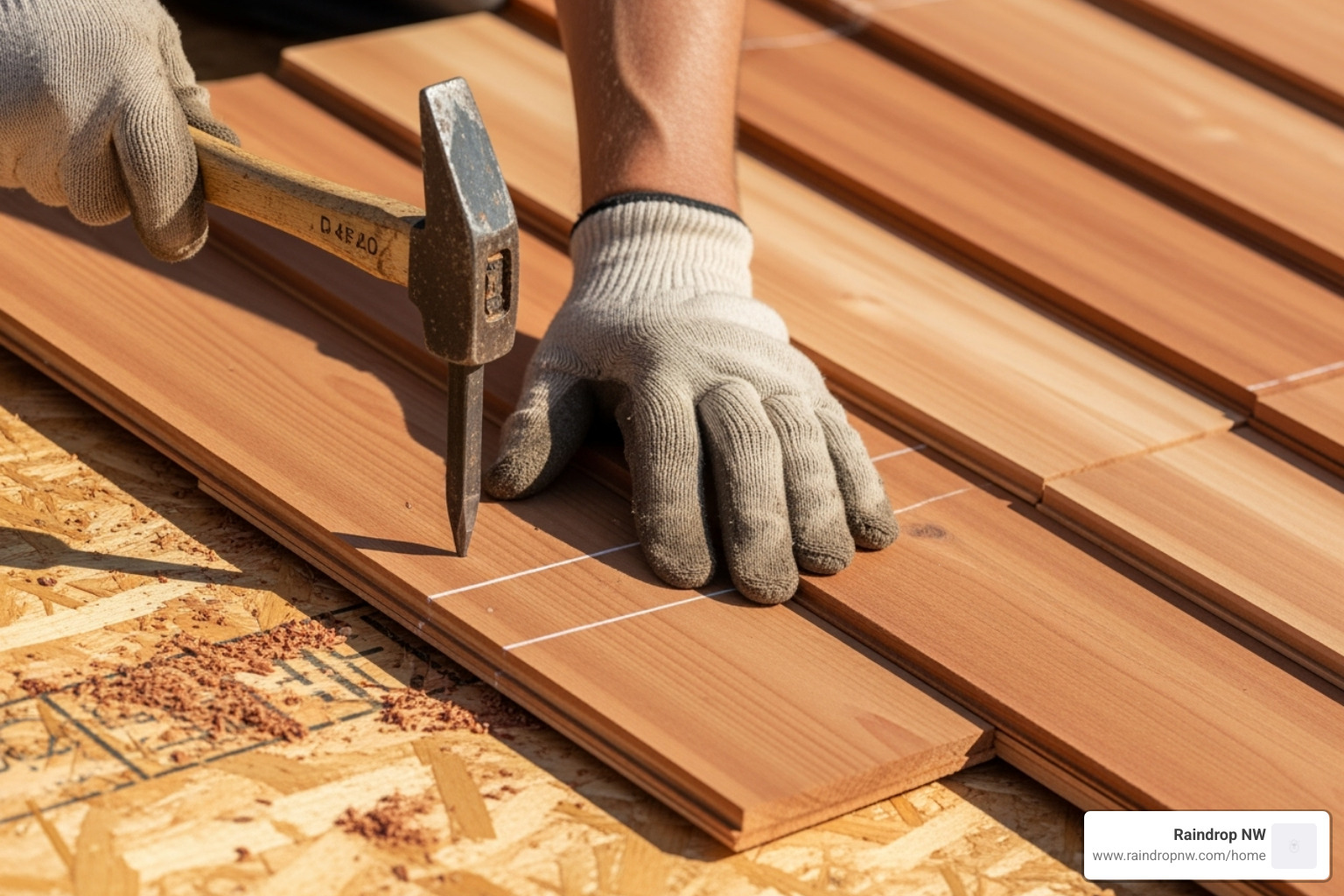
We use chalk lines to maintain a consistent exposure (the visible portion of the shingle, typically 5 inches) for a uniform appearance. Each shingle is secured with two nails. We stagger the joints between shingles in adjacent rows by at least 1.5 inches to prevent water penetration. A 1/4-inch gap is left between shingles to allow for natural expansion and contraction, preventing buckling. Shingles are cut as needed to fit tightly around vents and edges, ensuring a weather-resistant seal.
Step 5: Finishing with the Ridge Cap
The ridge cap is the final piece, sealing the peak of the roof for a weathertight, polished finish. We use pre-formed or specially cut ridge cap shingles. If stiff, we soak them in water to make them pliable and prevent cracking. We overlap each cap shingle by about one inch to ensure proper water shedding. Nails are concealed by the overlapping shingles, and any exposed nail heads on the final piece are sealed with roofing cement for a watertight finish.
Crucial Details for a Lasting Cedar Roof
A cedar roof’s longevity depends on crucial details learned through experience. Overlooking these elements can lead to future problems.
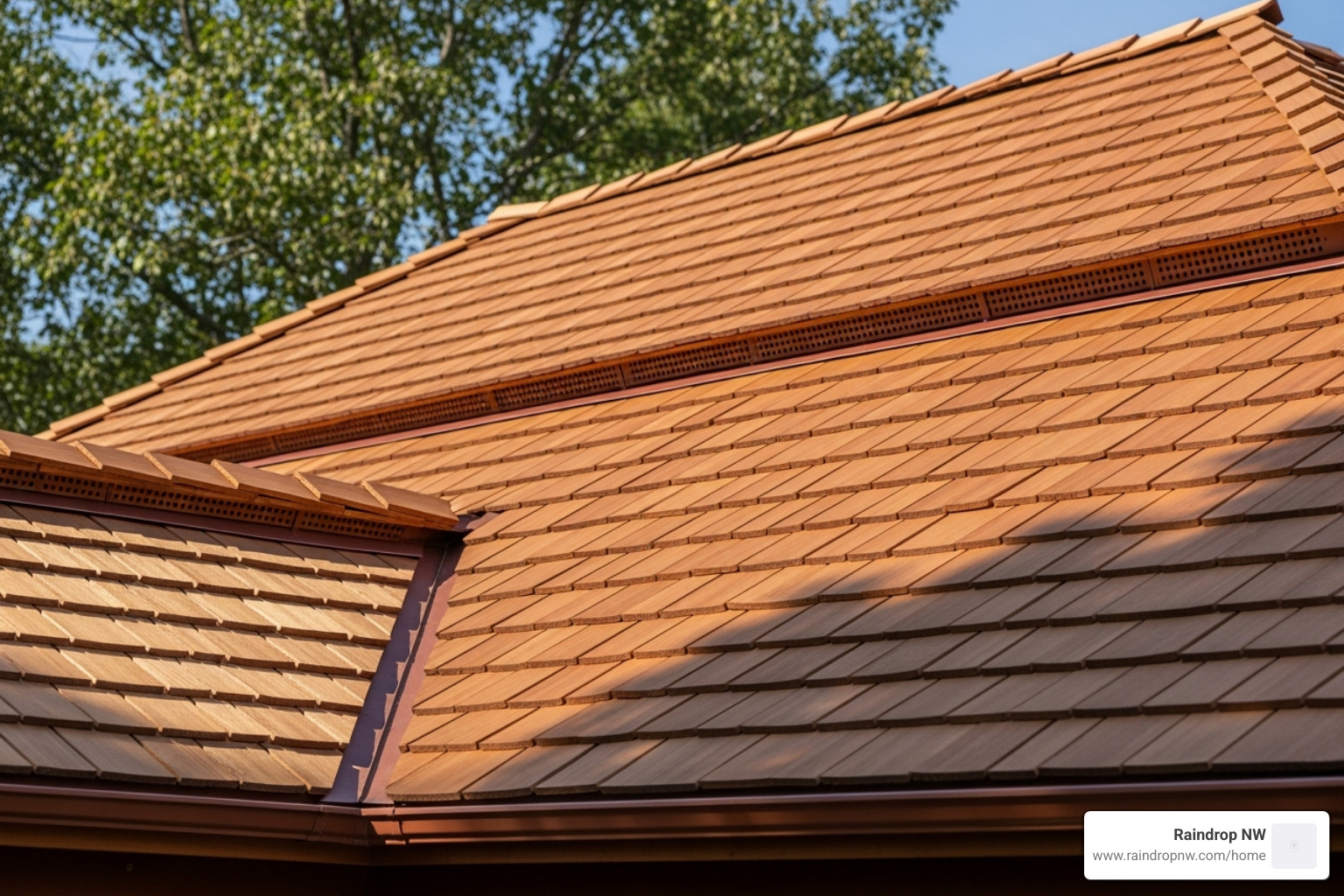
Common mistakes during cedar roofing installation in First Addition or projects include poor ventilation, incorrect fasteners, and improper water runoff management. These details are critical for a long-lasting roof. Let’s explore each of these critical elements.
The Importance of Proper Ventilation
Cedar is a natural material that needs to breathe. Proper ventilation is essential to prevent trapped moisture, which can lead to rot and decay. Good ventilation allows moist air from the attic to escape, preventing condensation on the roof deck that causes rot and mold. This is key to helping a cedar roof reach its 30 to 50-year lifespan.
Ventilation also regulates attic temperatures, preventing heat buildup in summer and ice dams in winter. For snowy climates, cold roof systems create an air space that allows constant airflow to prevent ice buildup. Optimal ventilation is achieved with a system of ridge vents at the peak and soffit vents at the eaves. It’s crucial to keep these vents clear of debris.
Fastener Guidelines for Cedar Shingles
The right fasteners, installed correctly, are critical for a cedar roof’s longevity. For Oregon’s damp climate, corrosion-resistant fasteners are non-negotiable. We recommend stainless steel ring-shank nails for their durability and holding power. Hot-dipped galvanized nails are also a good option. Avoid electroplated fasteners, which can rust and cause premature failure.
Nail length is important; fasteners must penetrate the sheathing by at least 3/4 inch. Each shingle gets two nails, placed 3/4 to 1 inch from the sides and 1.5 inches above the butt line of the next course, ensuring they are covered. While nail guns are faster, hand-nailing offers more control to prevent over-driving or under-driving nails, which can damage shingles or create leak points. Driving nails flush without crushing the wood requires experience, which is vital for a proper cedar roofing installation in First Addition or.
Ensuring Water Runoff and Preventing Leaks
A roof’s main job is to shed water. With cedar, this relies on meticulous installation techniques where all components work as a system.
- Proper shingle overlap is key, creating multiple layers of protection so water cannot find a direct path to the roof deck.
- Correct flashing techniques are critical around chimneys, vents, and skylights. In valleys, the metal flashing must extend generously on both sides of the centerline to handle water flow.
- Staggering joint patterns by at least 1.5 inches between courses is fundamental to weather resistance and prevents water from finding a continuous path downwards.
- The starter course is engineered with a precise overhang and double-layer construction to effectively shed water away from the fascia.
- Complex roof geometries like hips and valleys require specialized techniques and professional expertise to ensure a weathertight finish.
Regular inspections help catch any developing issues. Our team provides thorough roof inspections and certifications to give you peace of mind.
Cedar Roof Longevity: Maintenance and Professional Expertise
A cedar roof is a significant investment that requires proper care. It’s important to know which maintenance tasks are DIY-friendly and when to call a professional.
While we’ve outlined the steps for a cedar roofing installation in First Addition or, it’s a complex project that demands expertise, physical ability, and time. Roofing carries serious safety risks. If you’re uncomfortable with heights or lack fall protection, it’s best to hire professionals. Furthermore, small installation mistakes can lead to costly water damage down the road, making professional installation a wise investment in long-term performance.
Essential Maintenance Practices
Ongoing care will help your cedar roof reach its 30-50 year lifespan.
- Regular Inspections: Twice a year (spring and fall), inspect your roof from the ground with binoculars. Look for loose or damaged shingles and debris buildup.
- Keep it Clean: Remove leaves and pine needles, as they trap moisture and encourage rot. Use a soft broom or leaf blower, avoiding aggressive cleaning that could damage the shingles.
- Control Moss: Excessive moss holds moisture and leads to decay. Installing a zinc or copper strip at the ridge can help prevent growth. Also, trim overhanging branches to reduce debris and shade. Never power wash a cedar roof, as it can cause damage. Use gentle brushing or call a professional for moss removal.
- Professional Annual Inspections: An expert can spot subtle issues before they become major problems, assessing the roof’s overall health and recommending necessary repairs.
When to Hire a Professional for Cedar Roofing Installation in First Addition, OR
Professional help is essential for a cedar roofing installation in First Addition or in several situations:
- Steep Pitch: Working on a roof with a significant incline requires specialized equipment and experience.
- Complex Design: Multiple valleys, dormers, or skylights require intricate flashing and cutting techniques that take years to master.
- Structural Issues: If tear-off reveals rot or damaged rafters, you need a professional who can handle structural repairs before roofing. Our team is equipped to handle these repairs and maintenance.
- Warranty Compliance: Many manufacturers require professional installation to honor their product warranties.
- Value of Craftsmanship: A professional brings an aesthetic eye for a uniform appearance and completes the job safely and efficiently, providing a warranty for their work.
If you’re ready to move forward with confidence, explore our new replacement roof services or learn more about our comprehensive residential roofing offerings.
Conclusion: Protecting Your First Addition Home with a Beautiful Cedar Roof
As we’ve seen, a cedar roofing installation in First Addition or is a craft that blends traditional techniques with modern building science to create a durable, beautiful roof. Choosing cedar for your home shows an appreciation for natural beauty, lasting quality, and materials suited for the Pacific Northwest climate. A well-installed cedar roof transforms your home’s character, providing superior insulation and curb appeal.
When installed correctly with attention to detail, your cedar roof will protect your family for 30 to 50 years. It’s not just a roof; it’s a legacy.
At Raindrop NW, we are a local, independently owned company serving our Oregon neighbors. We stand behind our work, committed to doing the job right the first time. This principle guides every project we undertake, from simple repairs to complete roof replacements.
If you’re ready to experience the timeless beauty and lasting protection of a cedar roof, we’d love to help make it happen. Get a professional new replacement roof and let’s create something beautiful together—something that will shelter your family and add value to your home for generations to come.